RHYOLITE
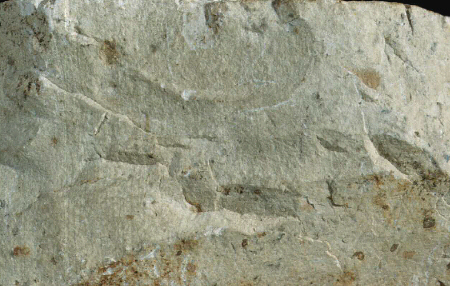 Rhyolite is extrusive igneous rock that is the volcanic equivalent of granite. Most rhyolites are porphyritic, indicating that crystallization began prior to extrusion. Crystallization may sometimes have begun while the magma was deeply buried; in such cases, the rock may consist principally of well-developed, large, single crystals (phenocrysts) at the time of extrusion. The amount of microcrystalline matrix (groundmass) in the final product may then be small. In most rhyolites, however, the period of such crystallization is relatively short, and the rock consists largely of a microcrystalline or partly glassy matrix containing a few phenocrysts. The glassy rhyolites include obsidian, pitchstone, perlite, and pumice.
The chemical composition of rhyolite is very like that of granite. The phenocrysts of rhyolite may include quartz, potassium feldspar, plagioclase feldspar, biotite, amphibole, or pyroxene. Certain differences between rhyolite and granite are noteworthy. Muscovite, a common mineral in granite, occurs very rarely and only as an alteration product in rhyolite. In most granites the potassium feldspar is microcline or microcline-perthite; in most rhyolites, however, it is sanidine. A great excess of potassium over sodium, uncommon in granite except as a consequence of hydrothermal alteration, is not uncommon in rhyolites.
Rhyolites are known from all parts of the Earth and from all geologic ages. They are mostly confined, like granites, to the continents or their immediate margins, but they are not entirely lacking elsewhere. Small quantities of rhyolite have been described from oceanic islands remote from any continent. An unusual occurrence of rhyolite has been observed in the Mojave Desert. There the rhyolite occurs in bimodal volcanic fields comprised of basalt and rhyolite. An absence of the intermediate volcanic rock, andesite, suggests these two rock types had separate origins and their parent magmas did not mix. The origin of these bimodal fields remains the subject of much study and conjecture.
| PREVIOUS PAGE | ID ANOTHER IGNEOUS ROCK | IGNEOUS ROCKS HOME |