VOLCANIC TUFF
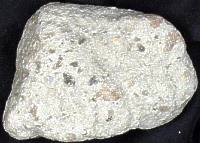 Tuff is a termed used to describe a relatively soft, porous rock that is usually formed by the compaction and cementation of volcanic ash or dust. Tuffs may be grouped as vitric, crystal, or lithic when they are composed principally of glass, crystal chips, or the debris of pre-existing rocks, respectively. Some of the world's largest deposits of vitric tuff are produced by eruptions through a large number of narrow fissures rather than from volcanic cones.
In extensive deposits, tuff may vary greatly not only in texture but also in chemical and mineralogical composition. There has probably been no geological period entirely free from volcanic eruptions; tuffs therefore range in age from Precambrian to Recent. Most of the older ones have lost all original textures and are thoroughly recrystallized. In some eruptions, foaming magma wells to the surface as hot gases and incandescent particles; the shredded pumaceous material spreads swiftly, even over gentle gradients, as a glowing avalanche (nuée ardente) that may move many miles at speeds greater than 100 miles per hour. After coming to rest, the ejecta (erupted matter) may be firmly compacted by adhesion of the hot glass fragments to form streaky, welded tuffs (ignimbrites) such as those covering vast areas in Yellowstone National Park in the United States and the Owens Valley, CA (Bihop Tuff).
| PREVIOUS PAGE | ID ANOTHER IGNEOUS ROCK | IGNEOUS ROCKS HOME |