MARBLE
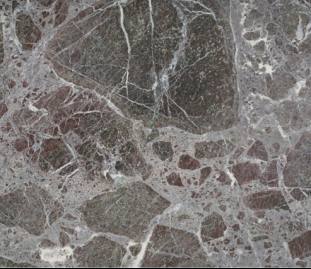 Marble is a granular limestone or dolomite that has been recrystallized under the influence of heat, pressure, and aqueous solutions. Commercially, it includes all decorative calcium-rich rocks that can be polished, as well as certain serpentines. Marbles are massive rather than layered and consist of a mosaic of interlocking calcite grains. They often occur interbedded with such metamorphic rocks as mica schists, phyllites.
Most of the white and gray marbles of Alabama, Georgia, and western New England are recrystallized rocks, as are a number of Greek and Italian statuary marbles famous from antiquity. These include the Parian marble, the Pentelic marble of Attica in which Phidias, Praxiteles, and other Greek sculptors executed their principal works, and the snow-white Carrara marble used by Michelangelo and Antonio Canova and favored by modern sculptors. The exterior of the National Gallery of Art in Washington, D.C., is of Tennessee marble, and the Lincoln Memorial contains marbles from Colorado, Alabama and Georgia.
Even the purest of the metamorphic marbles contain some accessory minerals. The commonest are quartz in small rounded grains, scales of colorless or pale-yellow mica (muscovite and phlogopite), dark shining flakes of graphite, iron oxides, and small crystals of pyrite. Many marbles contain other minerals that are usually silicates of lime or magnesia. Diopside is very frequent and may be white or pale green; white bladed tremolite and pale-green actinolite also occur; the feldspar encountered may be a potassium variety but is more commonly a plagioclase (sodium-rich to calcium-rich) such as albite, labradorite, or anorthite.
These minerals represent impurities in the original limestone, which reacted during metamorphism to form new compounds. The alumina represents an admixture of clay; the silicates derive their silica from quartz and from clay; the iron came from limonite, hematite, or pyrite in the original sedimentary rock. In some cases the original bedding of the calcareous sediments can be detected by mineral banding in the marble. The silicate minerals, if present in any considerable amount, may color the marble; e.g., green in the case of green pyroxenes and amphiboles; brown in that of garnet; and yellow in that of epidote and sphene. Black and gray colors result from the presence of fine scales of graphite.
| PREVIOUS PAGE | ID ANOTHER METAMORPHIC ROCK | METAMORPHIC ROCKS HOME |