Biotite
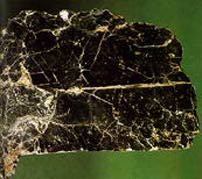 Biotite is a very common mineral. In igneous rocks it is characteristic of silicic and alkalic rocks such as granite, granodiorite, quartz diotite, pegmatite, syenite, nepheline syenite, rhyolite, rhyodacite, dacite, and phonolite. It also is found as a late-stage magmatic product in more mafic rocks including diorite, gabbro, norite, and anorthosite. Mg-rich biotite (phlogopite) is found in peridotite and other ultramafic varieties. In metamorphic rocks, biotite is very common in a wide variety of hornfels, phyllites, schists, and gneisses and may persist from greenshist facies through strongly migmatitic rocks. Mg-rich biotite is also found in marble and related metamorphosed carbonate-rich rocks.
Biotite also is a relatively common detrital mineral, particularly in immature sediments, but yields to clay minerals with extended weathering and transport.
Most vermiculite is a hydrated alteration product of biotite. Alteration, accomplished either by weathering or hydrothermal processes, results in leaching of interlayer K cations and replacement with Ca, Mg, and water, with ion exchanges in other sites as needed to maintain electric neutrality. As a result of adding the interlayer water, vermiculite is prone to dramatic expansion when heated. It owes its name to the observation that books of vermiculite, when heated, expand into worm-like shapes. For most applications, the vermiculite is heated to force it to expand, producing a low-density product that looks like dirty fluffed-up biotite.
Expanded vermiculite is used as an insulation material, a filler in gypsum wall board or other construction materials, and in a variety of other industrial applications. The most frequently encountered use for most people is as an additive in potting soil used to grow house plants.
| PREVIOUS PAGE | ID ANOTHER MINERAL | MINERALS HOME |