Muscovite
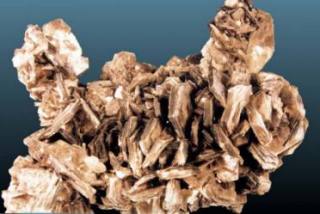 Muscovite is a very common mineral found in igneous, metamorphic, and sedimentary rocks. In igneous rocks it is a common constituent of granitic pegmatite, granite, granodiorite, aplite, and related felsic rocks. It is somewhat less common in felsic volcanic rocks. Sericite is widespread in many igneous rocks, produced by the hydrothermal or late-stage magmatic alteration of feldspars and other minerals. The alteration may be selective, replacing only the cores of plagioclase grains or selected twin lamellae. Muscovite is a constituent of a wide variety of metamorphic rocks including slate, phyllite, schist, gneiss, homfels, and quartzite that are produced by metamorphism of common sedimentary rocks. Clastic sediments derived from crystalline terranes and not subjected to extensive weathering or transport often contain muscovite. It is therefore a common mineral in arkosic sandstone and related siliclastic sedimentary rocks
One of the earliest uses for muscovite was as a substitute for glass because thin cleaved sheets are transparent. It is still used infrequently for viewing windows in industrial
furnaces and ovens. It is now widely used in electronics and industrial applications. Muscovite sheets and ground muscovite are used in the electronics industry to make components as diverse as capacitors, transistors, insulators, and the windows on microwave tubes used in microwave ovens. Industrial applications include use as a filler in plastic, paint, and wallboard cement, coatings on wallpaper to produce a silky luster, mold release agents in the manufacture of automobile tires, and as a constituent of drilling mud used when drilling for oil and gas. Consumer products that contain muscovite include nail polish, lipstick, and eye shadow. The subtle luster seen in many colored cosmetic creams is there because of the presence of pulverized muscovite.
| PREVIOUS PAGE | ID ANOTHER MINERAL | MINERALS HOME |